
Why poetry gives you goosebumps
A goosebump camera, the wait for a final line, and sad poems you want to hear again. What research can tell us about poetry and emotion.
Someone reads a poem about a person who never came back, or a house nobody lives in anymore. You are listening, quite normally, until the final line catches you. Before you have worked out why, your skin has already joined in.
Poetry can cause chills and visible goosebumps. Researchers have observed both in a laboratory, using sensors and a camera. But there is no single explanation that covers every poem and every listener. Meaning, sound and the expectation of an ending may work together; researchers are still sorting out their contributions.
We could call it “the power of poetry” and leave it there. Except this story includes a device called a goosecam, which seems worth a closer look.
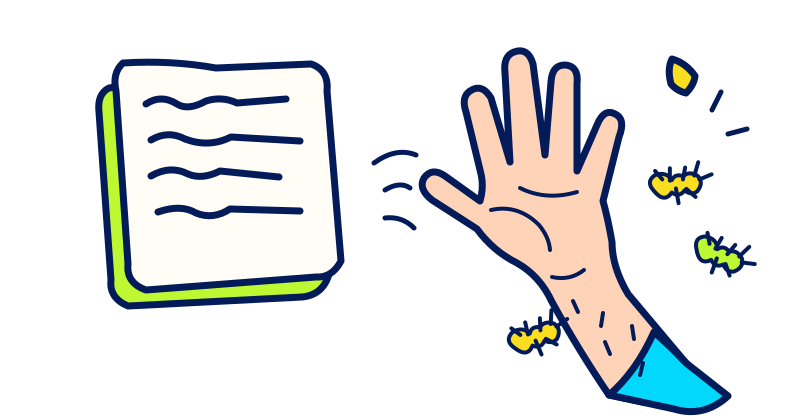
Yes, they filmed the goosebumps
In a 2017 study by Eugen Wassiliwizky and colleagues, 27 German-speaking participants listened to professional recordings of poems. Researchers chose some of the texts; listeners supplied others, having been asked to pick poems that might move them strongly.
Participants pressed a button when they felt a chill. The team also recorded skin conductance, heart rate and facial muscle activity. The goosecam filmed the skin surface to detect hairs actually standing up. The experiment went rather further than asking whether everyone enjoyed the reading.
All 27 participants reported chills. The camera recorded visible goosebumps in 11. Feeling a shiver and having raised hairs are therefore not quite the same thing.
This was a small group inclined towards poetry, listening to deliberately evocative material. It does not mean every poem affects everyone, or that 11 out of 27 is the proportion of people worldwide who get goosebumps.
Do you have to know the poem already?
Not necessarily. Unfamiliar poems also prompted responses in the main experiment. In a follow-up with 30 people who were not poetry experts, 76.7% reported chills from unfamiliar poems, according to the same paper.
Being unfamiliar with poetry is different from disliking it. This experiment does not establish that one well-chosen sonnet will convert every survivor of compulsory school recitation.
It does suggest something smaller and more interesting: a poem can reach you on a first encounter. You need not learn the author’s biography and pass a short exam before you are allowed to feel anything.
Sometimes the feeling starts before the full stop
The researchers looked at where listeners pressed the button. Chills tended to cluster near the ends of lines, stanzas and entire poems. Skin-conductance signals also showed a separate rise before the chill itself.
Their interpretation is that a listener may anticipate an emotional ending before it arrives. Rhyme and rhythm offer clues that a line is about to finish. Meaning gives you a reason to care about what it will say.
That is an interpretation of timing patterns, not proof that a particular rhyme switches on goosebumps. ABAB does not come with a warranty.
Our rhyme-scheme examples from real poems show how endings answer one another. Reading them aloud is useful at least for hearing the difference.
Rhyme can matter without being compulsory
In an experiment by Obermeier and colleagues in 2013, listeners heard altered versions of German quatrains: rhyming or unrhymed, with regular or disrupted meter. Rhyming and metrically regular versions received higher ratings of aesthetic liking and emotional intensity.
These were ratings of listeners’ impressions, not filmed goosebumps. The results concern particular materials; they do not establish that an unrhymed poem cannot move anyone.
Voice and pauses are worth noticing, too. The main chills study used professional recordings, so its results cannot simply be equated with any reading from a screen. It did not separately establish how much the performers’ skill contributed.
Why would you want to hear a sad poem again?
Being moved need not feel pleasant in the way good news feels pleasant. A poem can make you sad and still be something you like.
During strong responses in the 2017 study, a facial muscle associated with negative emotion became more active. In a separate brain-scanning session, researchers also observed activity in reward-related regions. Together, these findings support the idea of mixed feelings in deeply moving experiences.
A brain scan shows activity in brain regions. This experiment did not measure how much dopamine was released. “Poetry injects happiness” would make a convenient headline and an unfortunate summary.
A 2024 theoretical review discusses expectation, reward and bodily signals in aesthetic chills. The authors point out gaps: much of the evidence comes from music. There is still no single established mechanism for all art forms.
And if you feel nothing in particular?
Then you feel nothing in particular. You do not need to keep reading until your skin supplies the correct answer.
A 2026 study by Bignardi and colleagues analyzed data from 15,606 people in the Netherlands. It examined differences in proneness to these experiences and found contributions from genetic and familial factors. An important limit: one questionnaire item combined poetry with visual art, and responses were self-reports. This was neither a test of reactions to a particular poem nor the discovery of a single “poetry gene.”
Goosebumps are not a grade for your sensitivity or an objective score for a text. A poem might interest you, make you laugh or leave a phrase you remember in the evening. Reading requires no certificate from your skin.
A strong feeling does not make the words true, either. We explore another sound-related trap in why rhymes can feel more convincing.
A small experiment without a laboratory
Choose a short poem. Read it silently, then aloud, without trying to play an entire theatre company. Where do you want to pause? Which word do you expect at the end? Does the final line change what you have just heard?
You could listen to someone else or a recording. This is an invitation to notice your response, not a tested method for producing chills. If nothing remarkable happens, you have still read a poem. A respectable return on a few minutes.
In Rhyma, someone else writes the last line
In Rhyma, people add one line at a time, see only the last line written, and discover the complete poem after it is finished. The ending may turn out very differently from the one you expected.
These studies did not test Rhyma. We do not know whether a shared, partly hidden text produces the same responses. You can try writing together and read what comes out.
We cannot guarantee goosebumps. Or a zucchini, although its chances should not be underestimated.
Sources
- Wassiliwizky and colleagues (2017). The emotional power of poetry.
- Obermeier and colleagues (2013). Aesthetic and emotional effects of meter and rhyme in poetry.
- Schoeller and colleagues (2024). The neurobiology of aesthetic chills: a theoretical review.
- Bignardi and colleagues (2026). Genetic underpinnings of chills from art and music.