Types of rhyme and rhyme schemes, without the homework
Hear the difference between perfect and slant rhyme, read AABB and ABAB, and see eleven common schemes in simple diagrams.
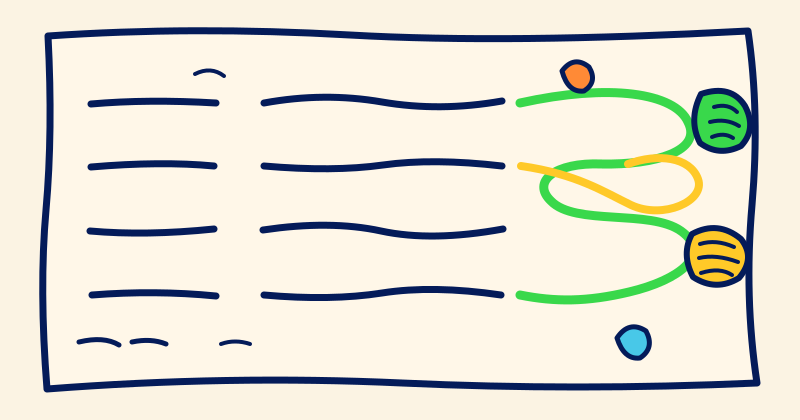
You write night and reach for light. Easy. Then life turns up: close enough to catch the ear, not quite the same sound. Someone draws ABAB in the margin and suddenly the poem looks like homework.
There are two different questions here. A type of rhyme tells us how sounds match, or where the match sits. A rhyme scheme tells us which lines share an ending sound. In a scheme, A stands for one sound family, B for another. The letters aren’t grades. This is the convention used in the Academy of American Poets’ glossary.
There is no final list of every possible scheme: the letters can be combined almost endlessly, and traditions have their own forms. Here are the useful basics and eleven patterns worth recognizing.
What kind of rhyme are you hearing?
In a perfect rhyme, sounds match from the last stressed vowel onward: night / light. A slant or near rhyme sounds similar but not identical: night / life. Spelling is a poor referee; pronunciation matters, and it can vary by language and accent. The Academy explains the distinction.
One study of imperfect rhyme had listeners judge German word pairs and metered couplets. Sound similarity and the verse around the words mattered to what they heard as a rhyme. The study wasn’t about Rhyma, nor a ruling on which poems are “correct.” It simply shows why ears don’t behave like a spelling checker.
End rhyme lands at the ends of lines. Internal rhyme happens inside a line, or between its middle and end. Position and exactness are separate: an internal rhyme can be imperfect, too. Eye rhyme looks alike in print but sounds different; English through / rough is a familiar example in the Poetry Foundation glossary.
Assonance echoes vowels; consonance echoes consonants. Both can make a line sound connected without making a full rhyme. Another distinction concerns the final stress. A masculine rhyme ends on a stressed syllable (night / light); a feminine rhyme continues through an unstressed one (flower / power, in pronunciations that give both two syllables). In Ukrainian prosody you may also meet dactylic rhyme, with the stress on the third syllable from the end. These are old technical labels for sound patterns, not for people; the stress system and examples don’t transfer neatly between languages.
Ukrainian scholars also classify rhymes by the number of words involved, parts of speech, and how far the matching sound extends. That yields labels such as compound, verb, rich and poor rhyme. A study of Ukrainian rhyme terminology notes that even specialists disagree on what “rich” or “full” means. Useful descriptions, then, not a multiplication table.
How to read the letters
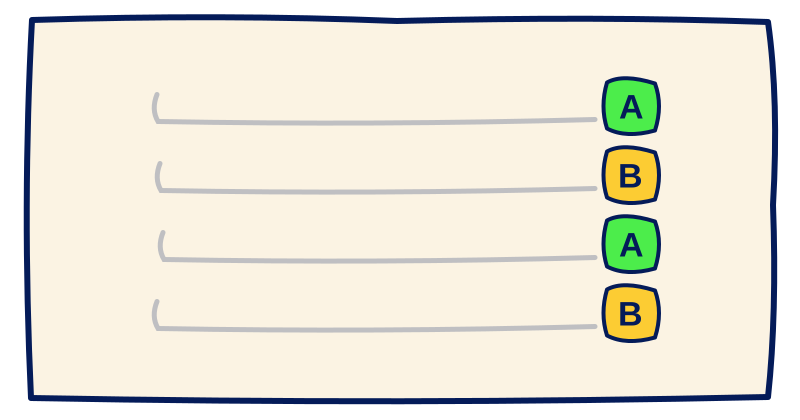
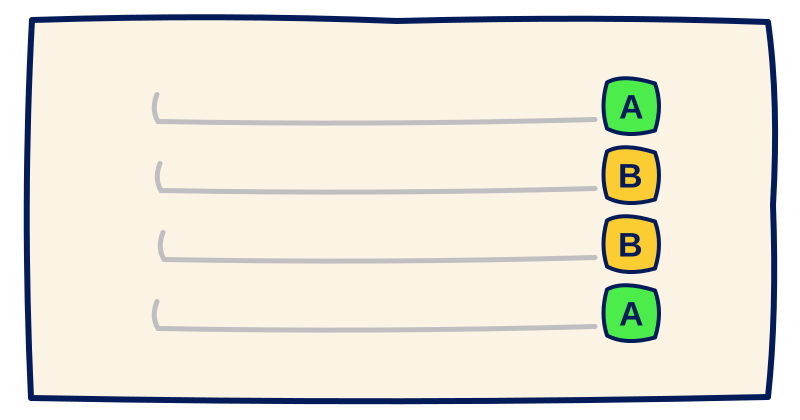
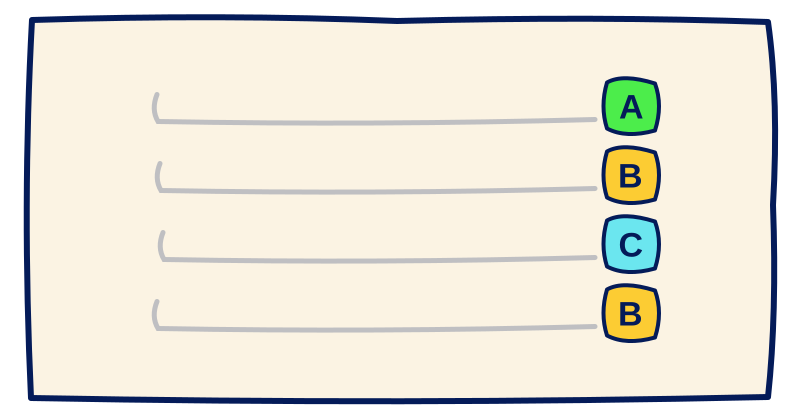
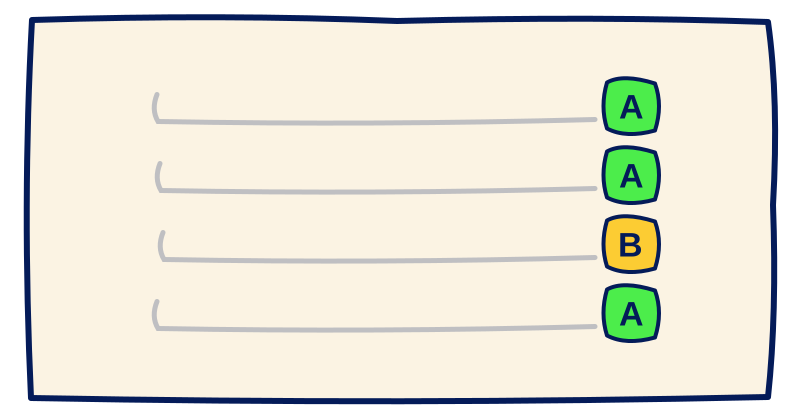
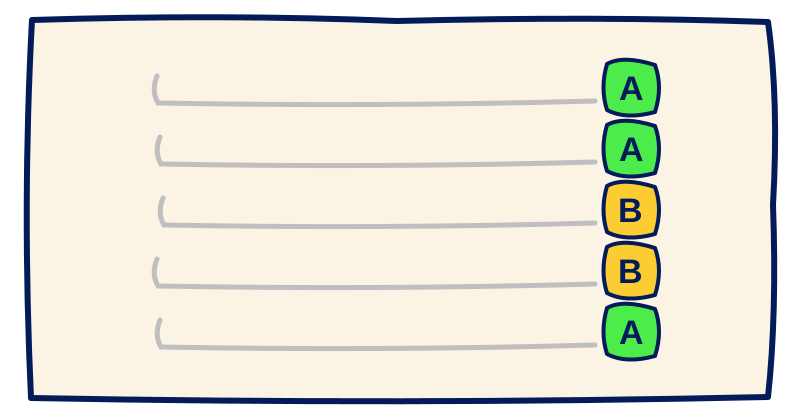
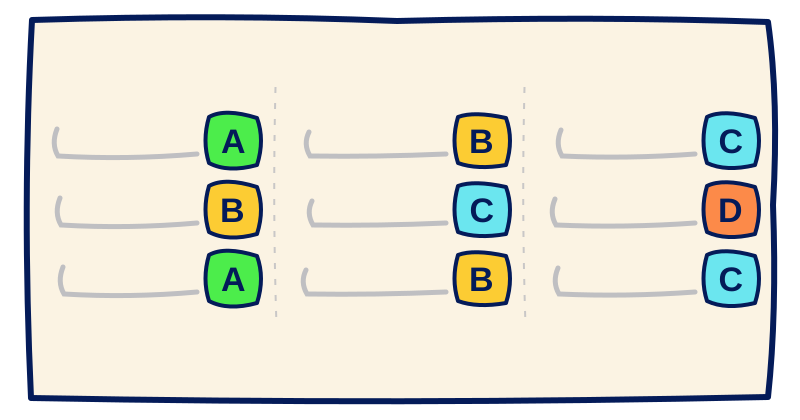
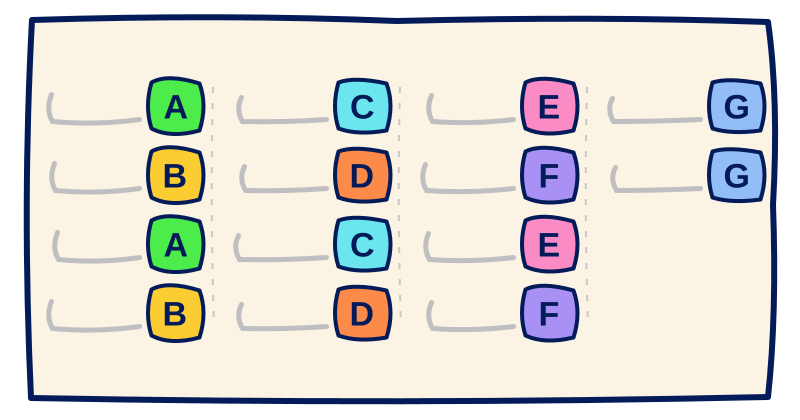
Look at the line endings. If lines one and three rhyme, they both get A. If two and four share a different sound, they get B. That makes ABAB. In the drawings, matching colors show matching end sounds. The strokes stand in for lines so the pattern stays visible without a fourteen-line sample poem.
One rhyme all the way: AAAA
All four lines return to one ending sound. That’s monorhyme. Drawing it is easy; keeping it from sounding like a rhyming dictionary is harder.
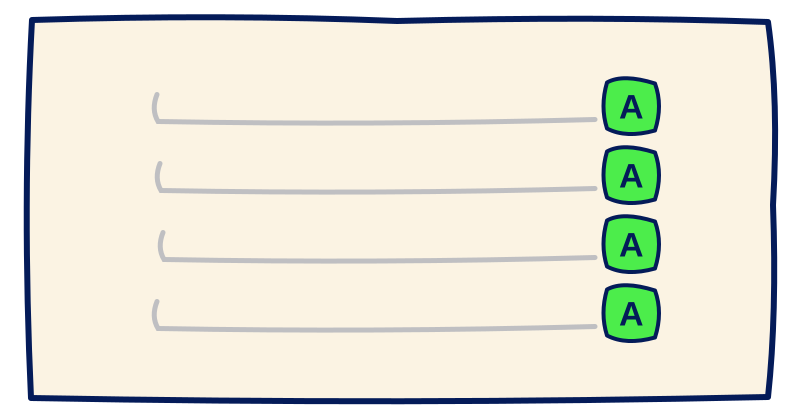
Pairs: AABB
Line one rhymes with two, and three with four. Two small exchanges, one after the other. This is the couplet pattern.
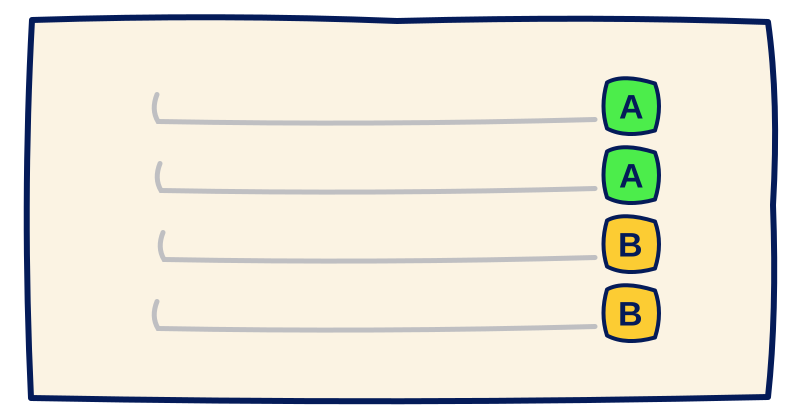
Alternating: ABAB
The first line waits for the third; the second answers in the fourth. This pattern keeps the stanza moving before either sound settles.
Enclosed: ABBA
The outer lines rhyme, and the two middle lines rhyme. Think of closing a pair of brackets.
Only the even lines: ABCB
A and C are different endings that don’t return in this stanza. Only the two B lines rhyme. This loose quatrain is often associated with the English-language ballad. The Academy notes that ballads may rhyme the second and fourth lines, or all alternating lines.
Three returns and a detour: AABA
Lines one, two and four return to A; the third takes a brief turn to B. Poetry Foundation lists AABA among the many possible quatrain patterns. It isn’t the exclusive property of one form.
The same quatrain guide also gives AABB, ABAB, ABBA and ABCB. A scheme records the order of end rhymes. It doesn’t tell you the line length, beat or subject.
When a pattern belongs to a form
Limerick: AABBA
Five lines: the first two and last share A, with a shorter B pair in the middle. But five letters alone don’t make a limerick. Its springy rhythm and often comic or nonsensical story matter too. The Academy sets out the form.
Terza rima: ABA BCB CDC…
The middle rhyme of one tercet becomes the outside rhyme of the next. B opens the second group; C opens the third. The chain can keep going. That’s the heart of terza rima. The picture shows three links, not a required ending.
Three ways to arrange a sonnet
A traditional sonnet has fourteen lines, but counting won’t tell you which kind you’re reading. The Shakespearean pattern has three quatrains and a closing couplet: ABAB CDCD EFEF GG. The last two lines may gather the thought or turn it around.
The Petrarchan sonnet starts with ABBA ABBA. Its last six lines vary; CDE CDE is one option. A turn in thought often comes between lines eight and nine.
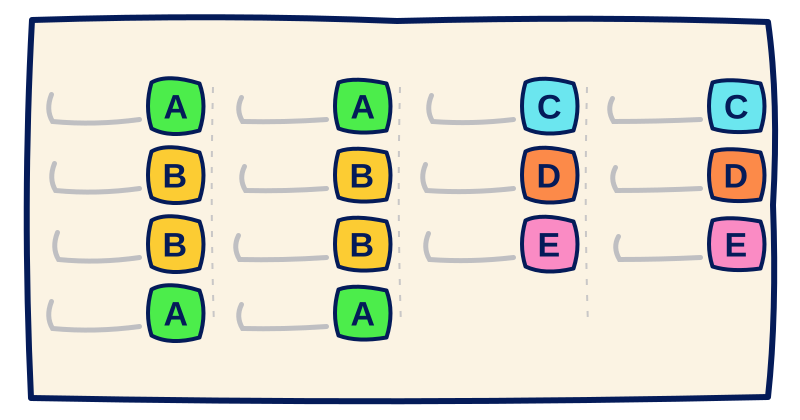
In the Spenserian version, the quatrains link: ABAB BCBC CDCD EE. The previous stanza’s rhyme doesn’t let go so quickly. All three conventional patterns, and their variations, appear in the Academy’s sonnet guide.
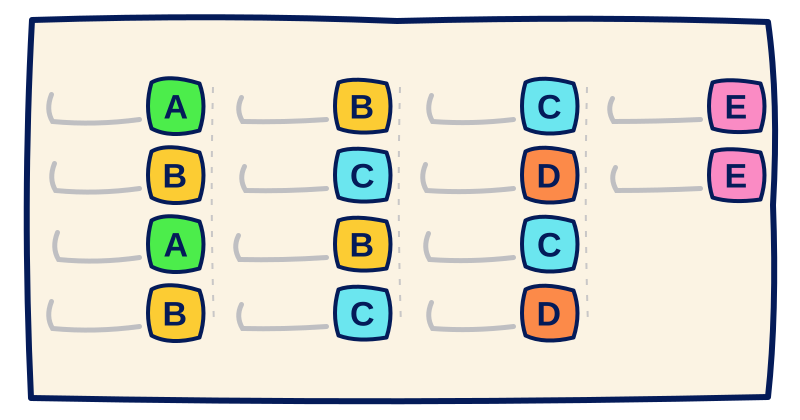
There are also villanelles, ghazals, rondeaux and triolets, some with repeated whole lines as well as repeated sounds. These eleven diagrams are an entrance map, not a census of every way to write a poem.
Now put the ruler down
You have learned AABB, ABAB and ABBA, survived terza rima, and may be planning a Spenserian sonnet in your head. In Rhyma, that preparation meets one small snag: when it’s your turn, you see only the preceding line. The whole poem appears after it’s finished.
You can rhyme with the line you see. You can’t reliably keep an ABAB pattern agreed on three turns ago: the A you need may be behind the curtain. This is a shared poem, not a prosody exam. Give your line to chance and to whoever comes next. They get one clue, too. Try Rhyma on Google Play.
If you’d rather steer every stanza together, see other ways to write poetry online and seven collaborative poetry games.
Sources
- Academy of American Poets: rhyme and poetic terms
- Poetry Foundation: rhyme and quatrain patterns
- Knoop and colleagues: perception of imperfect rhymes in German verse
- Ukrainian literature textbook: couplet, alternate and enclosed patterns
- Study of Ukrainian rhyme terms and disputed definitions
- Academy of American Poets: limerick, terza rima and sonnet